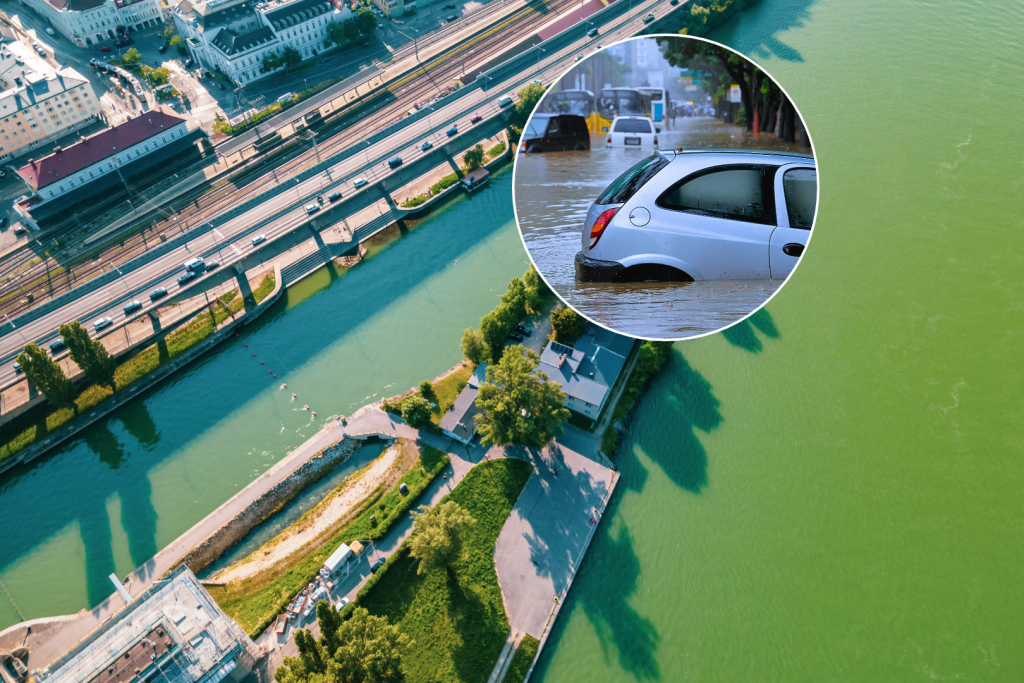

When the Danube rises dangerously in the fall after days of continuous rain, the Viennese usually watch the water with a sense of calm. When we visited the intake structure in Langenzersdorf during the last heavy rainstorm, the raw power of the floodwaters became truly tangible. What looks like a harmless local recreation area in everyday life is, in reality, a highly complex flood control system. It can handle up to 14,000 cubic meters of water per second.
But this reassuring sense of security was anything but a given. When the excavators rolled in in 1972 to dig a gigantic, 211-meter-wide trench —today’s New Danube —political tensions in Vienna ran extremely high. The project was denounced as a sinfully expensive “money pit.” The excavated material, which was later used to create the island itself, was viewed by many critics as a massive intrusion into the landscape.
The Impressive Mathematics of Survival
In retrospect, the vision at the time borders on a miracle, because without the so-called relief channel, districts such as Brigittenau (20th District) or Leopoldstadt (2nd District) would quickly be submerged under meters of water during extreme weather events.
By the way: If you want to stay up to date on exciting places, event discounts, and news in and around Vienna, feel free to follow us on Instagram, Facebook, or our WhatsApp channel !
The system is designed to handle even an extreme catastrophic event that, statistically, occurs only once every 10,000 years. When the massive floodgates are opened in the event of a flood threat, up to 14 million liters of water per second flow safely past Vienna. The dimensions speak for themselves. The 21-kilometer-long recreational island was built using precisely the 30 million cubic meters of excavated material that resulted from the digging of the New Danube.
A safety net for the future
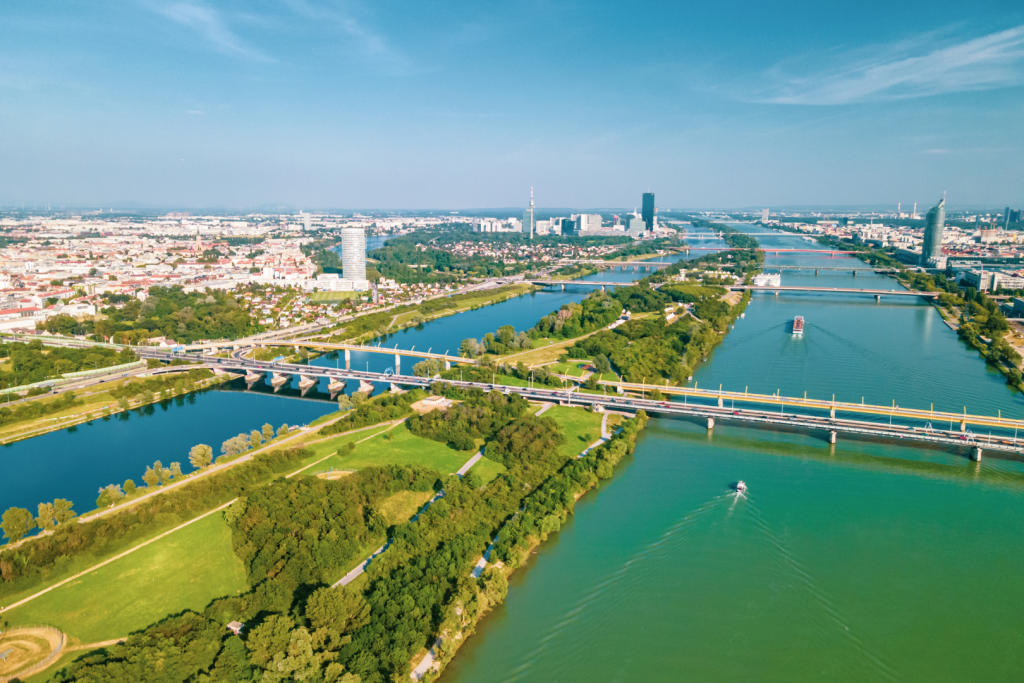
Due to climate change in Central Europe, this concept is more necessary today than ever before. While other major cities must invest billions to retrofit their flood protection systems, Vienna benefits enormously from that controversial decision made back then.
Today, exactly 54 years after the groundbreaking, the initial grumbling has long since subsided. Instead, we jog, bike, and walk quite naturally in the very place that protects our living rooms from the floods.