The range of classical performances in Vienna is diverse and unrivaled, because it is not for nothing that our city is considered a music metropolis. Whether State Opera, Musikverein or Konzerthaus, we lack for nothing. And when it comes to the perfect start to the new year, the whole world looks to our city. While others can only watch on screen, the highlight of classical music at the start of the year happens right on our doorstep.
Tradition with dark origins
As glamorous as the event is today, its roots are dark: the Vienna New Year’s Concert first took place on December 31, 1939 and was dedicated to the War Winter Relief Fund, which had previously been reopened by Hitler. The concert functioned as part of Joseph Goebbels’ propaganda machinery, whose plan was to stage Vienna as a city of “optimism, music and conviviality” after the annexation of Austria. The Vienna Philharmonic was not directly subordinate to Goebbels, meaning that its commitment to the Nazi regime was largely self-determined.
The conductor at the time, Clemens Krauss, conducted the concerts until the end of the war and in 1944 was included in the National Socialists’ list of “God-gifted” conductors, which was also part of the propaganda. After the end of the Second World War, Krauss was banned from conducting for two years by the Allies and only resumed conducting in 1948. The first concert after the end of the war on January 1, 1946 under the baton of Josef Alois Krips bore the now world-famous name “New Year’s Concert” for the first time.
The program of the Vienna New Year’s Concert
https://www.youtube.com/watch?v=HFfDiFvAE0I
Clemens Krauss was a great admirer of the Strauss dynasty, which has shaped the DNA of the New Year’s Concerts to this day. Until the early 1960s, the Vienna Philharmonic played music exclusively by the Strauss family (Johann Strauss I, Johann Strauss II, Josef Strauss and Eduard Strauss). It was not until 1961 that the orchestra added works by other composers to its repertoire, but the focus remains on the waltz kings of our city.
Nowadays, the Philharmoniker also perform pieces that have never been heard before in any of the New Year’s concerts. The concert is divided into two parts with an interval. At the end of the second part, three encores traditionally await you. While the first encore varies, the second and third have been fixed since 1958: The Danube Waltz “An der schönen blauen Donau” and the Radetzky March, during which clapping along is compulsory.
What to expect at the Vienna New Year’s Concert 2026
https://www.instagram.com/p/DERM50oowg9/?utm_source=ig_web_copy_link&igsh=NTc4MTIwNjQ2YQ==
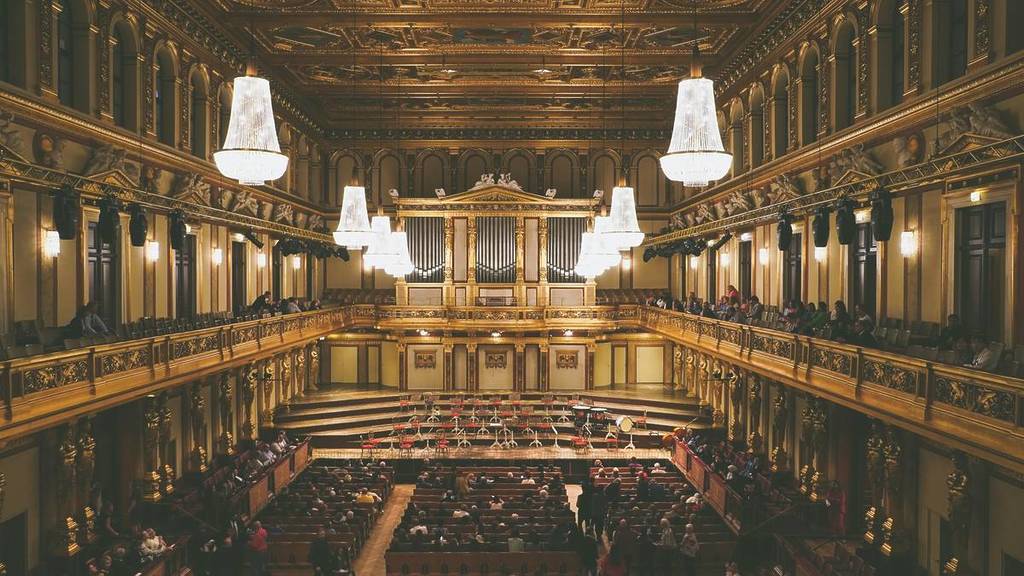
The concert will once again take place in the Great Hall of the Vienna Musikverein in 2026. While around 2,000 guests will be in attendance, the event will be broadcast in 150 countries. Around 50 million people watch on TV and livestream as Vienna welcomes in the New Year. Eurovision has been broadcasting the second part on television since 1959 and home viewers have been able to enjoy the full concert since 1991.
There will be a special premiere on the podium in 2026: Canadian Yannick Nézet-Séguin will make his debut as conductor of the New Year’s Concert. However, he is familiar with the orchestra, as he has already conducted the Philharmoniker several times, including at the Salzburg Mozart Week in 2010.
The concert begins on January 1, 2026 at 11:15 am. In addition to the Strauss dynasty, you can look forward to works by Joseph Lanner, Josephine Weinlich and Franz von Suppè. As tickets are in extremely high demand, many of us will probably be watching the spectacle from the comfort of our couch on ORF or streaming it live. If you want to experience even more Strauss, you can do so after the New Year’s Concert at the Strauss Dinner Show.
📍 Location: Great Hall, Musikvereinspl. 1, 1010 Vienna
📅 Date: 01 January 2026, at 11:15 am
💶 Price information: €35 to €1,200
📺 Broadcast: Live on ORF and in the TVthek