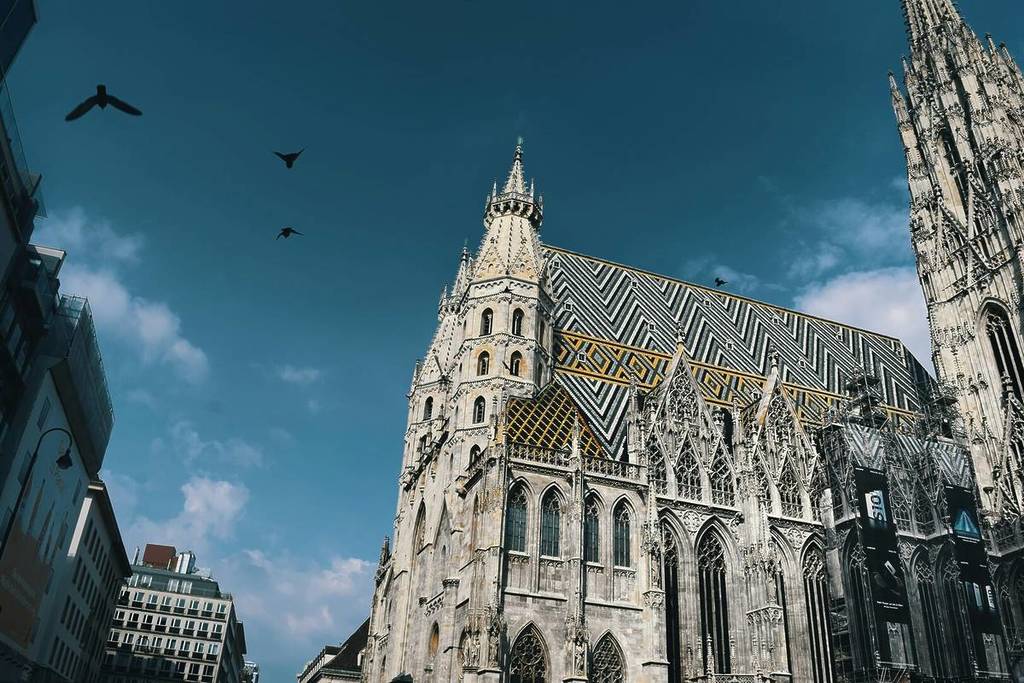
If you take a walk through Vienna, you will experience one thing above all: a lively city center, green parks and lots of people in front of the famous coffee houses. But deep underground, a hidden place slumbers directly under the many feet of the locals. About 12 meters below the magnificent St. Stephen’s Cathedral in the middle of Vienna lies the medieval Virgil Chapel. The crypt was forgotten for several centuries until a spectacular coincidence brought it back to light.
The long history of the forgotten Virgil Chapel
The chapel was built around 1220/30 in the early Gothic style. It was intended as a foundation for the planned church, but later served as a devotional chapel for wealthy Viennese families. In the Middle Ages, the crypt was located under the cemetery of St. Stephen’s Church. The Maria Magdalena Chapel stood above it for a long time, but was demolished after a fire in 1781.
The Virgil Chapel underneath was then forgotten and was even partially filled with rubble. It was only a few years ago, in 1973 to be precise, that the crypt was rediscovered: the magnificent building was found underground during the construction of the subway line. Following this spectacular rediscovery, the chapel was extensively restored. Since 2015, it has been part of the Wien Museum as the “Museum of the Middle Ages” and can be visited via the Stephansplatz subway system.
Rare insights into medieval Vienna
The Virgil Chapel was forgotten for 200 years. Today it is a listed, mystical one-off and a window into Vienna’s medieval past. A small permanent exhibition on site shows archaeological finds and the development of historic Vienna. Barrier-free admission costs just 5 euros and there are media and audio guides that provide clear explanations.
Today, the chapel is considered one of the best-preserved Gothic interiors in Vienna. Wall paintings from the 13th century have even been preserved, and it is also worth taking a look at the extraordinary interior design. With a height of up to 8 – 11 meters and six niches with pointed arches, it is not only worth seeing for architecture or history fans. The outline of the Magdalen Chapel that once stood above it is now visible as a mosaic in the pavement of St. Stephen’s Square.
The original purpose of the Virgil Chapel has not yet been fully clarified. It was probably intended to be a spiritual foundation project for a diocese of Vienna, which was never realized. The connection between the chapel and the history of Vienna goes back to Bronze Age settlement traces: as a “forgotten place of worship”, it provides a rare and fascinating insight into the deepest Middle Ages of the metropolis.