
In Vienna’s 23rd district, Liesing, on the slopes of Georgenberg in Mauer, lies a place that uniquely combines science and nature. Right next to the striking, brutalist Wotruba Church lies the Georgenberg Star Garden. It is not a classic observatory with a dome and high-tech telescopes, but rather an “open-air planetarium” that cultivates the ancient tradition of horizon astronomy and makes the sky comprehensible to the naked eye.
A monument to the stars
The history of the Star Garden is closely linked to two names in Austrian astronomy. The original idea for an open-air educational site for astronomy came from Professor Oswald Thomas, a pioneer of public astronomy education in Vienna. But it was not until decades after his death that the vision was brought to life by his student, Hermann Mucke. Under the auspices of the Austrian Astronomical Society, the facility was constructed between 1997 and 2000. The goal was to create a space where people could understand the mechanics of the universe— the movement of the sun, the stars, and the planets—without the aid of optical instruments.
Monuments of Time: What There Is to Discover at the Georgenberg Star Garden
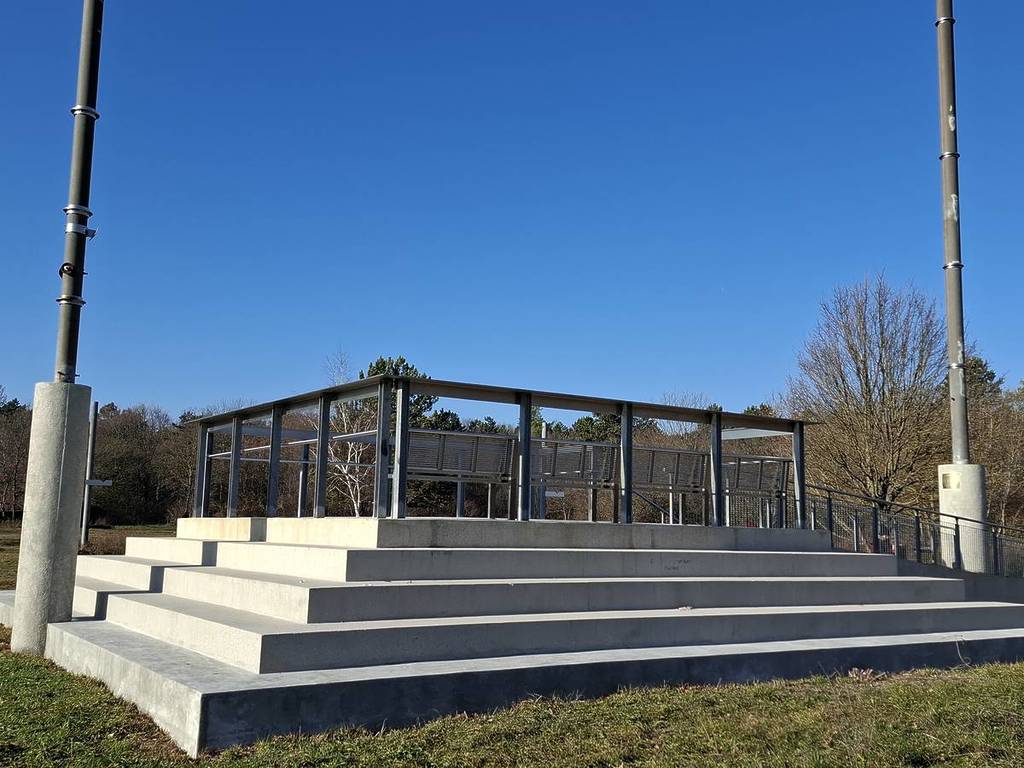
The Star Garden’s grounds are designed as an architectural measuring facility covering 2,000 square meters. The most striking element is the central, accessible stepped pyramid, which serves as an observation platform. Its parapet marks the precise mathematical horizon. From here, visitors look out at several sun pillars distributed across the grounds. These six pillars are positioned exactly so that they mark the sunrise and sunset points during the solstices and equinoxes.
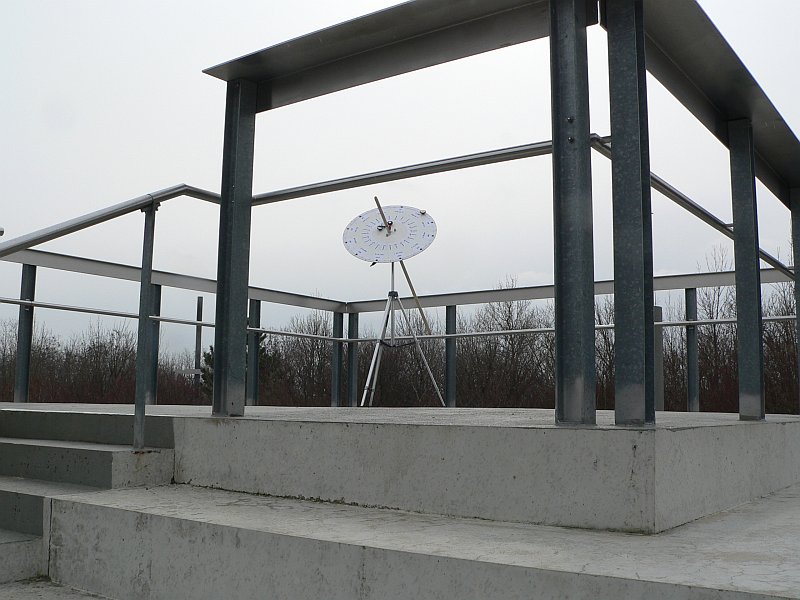
Additionally, the grounds feature a north and a south mast for determining the meridian passage of stars, as well as a large-scale sundial that displays true local time. A scale model planetary path complements the facility and vividly illustrates the vast distances within our solar system.
The perfect time to visit
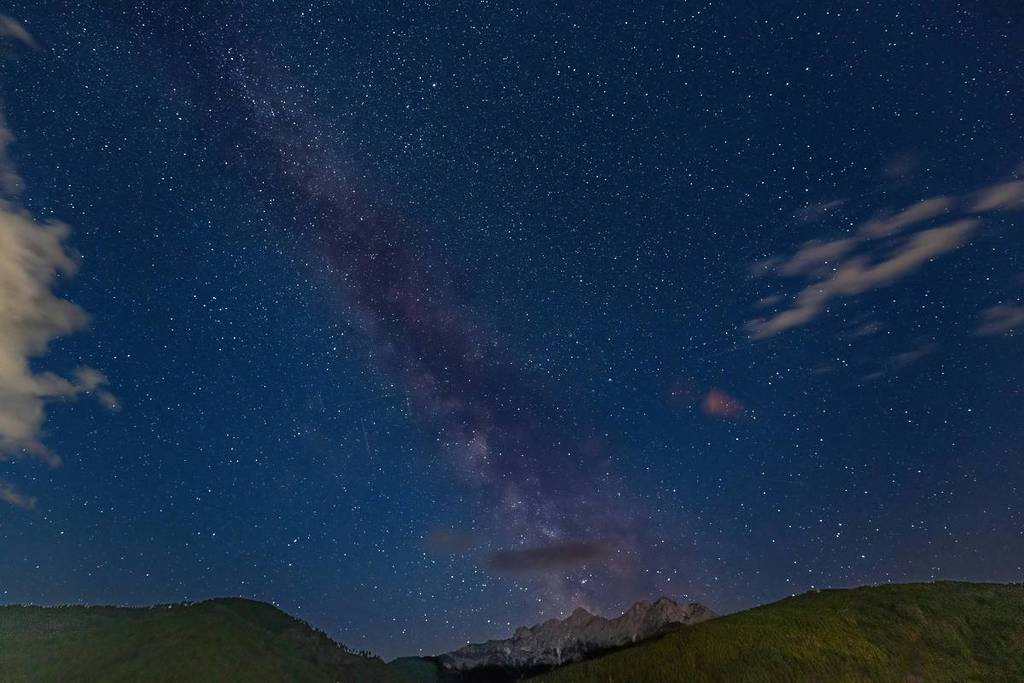
A visit to the Georgenberg Star Garden is always worthwhile on any clear night, as light pollution is lower on the outskirts of the city than in the center. However, the site is particularly fascinating during the astronomical milestones of the year: the summer and winter solstices (around June 21 and December 21) as well as the spring and fall equinoxes. On these days, the sunrises and sunsets can be observed precisely over the marked columns. In addition, the Astronomical Society regularly offers expert-led tours that explain complex celestial mechanics in a way that is understandable to laypeople, transforming this place into a living classroom under the open sky.