Vienna attracts numerous visitors with its sights and architectural gems, who stroll through our city every day. But if you prefer to get away from the crowds, you should head underground. Here you will find many exciting places, such as the ghost train station on Lerchenfelderstraße. But there are also other locations that are not lost places waiting for you in Vienna’s underground, which you can visit. These include the Habsburg burial site, where over 150 people found their final resting place.
Royal resting place
data-instgrm-captioned data-instgrm-permalink="https://www.instagram.com/p/DQrB4ifAfTB/?utm_source=ig_embed&utm_campaign=loading" data-instgrm-version="14" style=" background:#FFF; border:0; border-radius:3px; box-shadow:0 0 1px 0 rgba(0,0,0,0.5),0 1px 10px 0 rgba(0,0,0,0.15); margin: 1px; max-width:540px; min-width:326px; padding:0; width:99.375%; width:-webkit-calc(100% - 2px); width:calc(100% - 2px);">
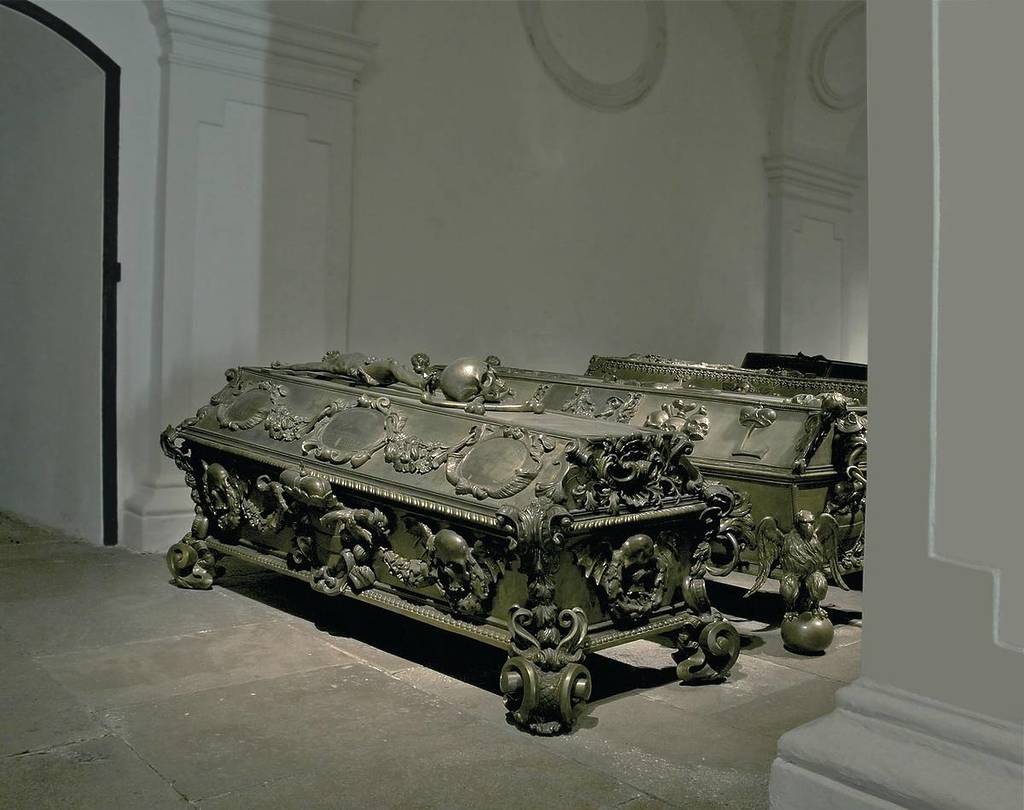
The Imperial Crypt, or Kapuzinergruft, is located beneath the Kapuzinerkloster (Capuchin Monastery) and served as a burial place for members of the Habsburg dynasty. It is the largest crypt in Austria. In 1617, Empress Anna donated the Kapuzinerkloster and ordered the construction of the crypt. The construction of the crypt took a total of 11 years, and after its completion, the coffins of Anna and her husband Matthias were transferred here. They are the only two people buried in the founders’ crypt.
The Imperial Crypt has undergone eight extensions over the years, the last of which took place between 1960 and 1962. It has nine rooms and a chapel, where 12 emperors and 19 empresses found their final resting place, as well as numerous other Habsburgs and other individuals. In a few exceptional cases, non-Habsburgs were buried in the Capuchin Crypt, including Prince-Bishop Karl Joseph III of Lorraine and Countess Karoline von Fuchs-Mollard. Until 1940, Napoleon’s son, Napoleon Franz Bonaparte, and his wife were also buried here. However, during the Second World War, he was transferred to Paris.
The funerals of the Habsburgs were usually magnificent state funerals. They usually had their hearts and entrails buried separately from their bodies, with the heart urns usually lying in the Heart Crypt and the entrails under St. Stephen’s Cathedral. This was intended to slow down physical decay. In addition to 147 bodies, there are also four heart urns in the Capuchin Crypt.
A tour of the Imperial Crypt
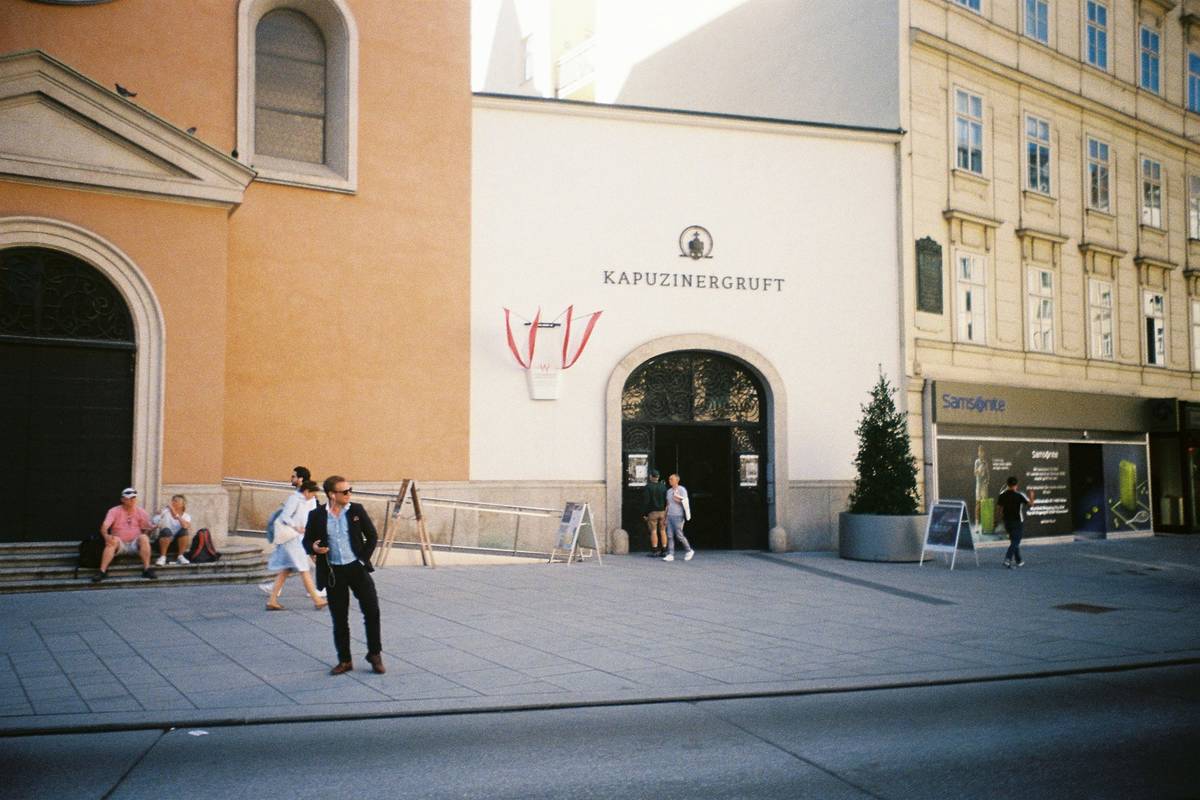 Photo: Shalva Dekanozishvili/Unsplash
You can visit the Imperial Crypt beneath the Capuchin Monastery. You can choose between a guided tour or a self-guided tour. Several times a month, there are also evening tours with a specific theme that provide you with information you won’t get on the regular tours. The tours are offered in German and English.
Your visit to the Capuchin Crypt begins in the exhibition in front of the Leopold Crypt and then takes you through the various rooms to the crypt chapel. Among the numerous metal coffins, the double sarcophagus of Maria Theresa and her husband Emperor Franz I Stephan stands out. It is adorned with a pillow with a crown and jewelry, which are also made of metal. Incidentally, the newest grave you will pass here dates from 2023: Yolande de Ligne took the last available space in the Imperial Crypt.
📍 Location: Tegetthoffstraße 2
🕐 Opening hours: daily, 10 a.m. to 6 p.m.
💶 Price information: €15 for an unguided visit, €21 for a guided tour