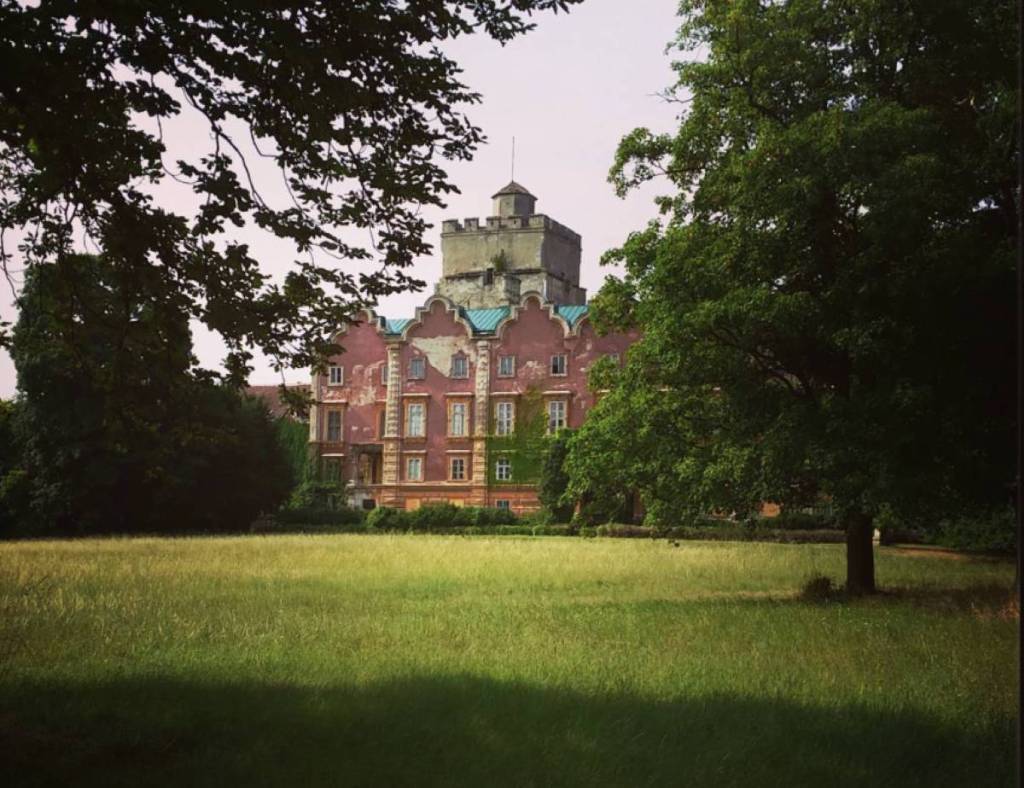

Harrach Park in Bruck an der Leitha is one of Austria’s most significant and beautiful historic gardens. Its roots date back to the late 18th century. Beginning in 1789, Johann Rudolph Count Harrach had the former Baroque garden surrounding Prugg Castle fundamentally redesigned. Inspired by the natural philosophies of the Enlightenment, a masterful English landscape garden was thus created.
In stark contrast to the strict, geometric symmetry of Baroque gardens, the English style breaks with any form of artificial order. Instead of dead-straight avenues and meticulously trimmed hedges, what dominates here is the deliberate staging of an idealized, seemingly untouched natural landscape. Winding paths meander gently through the expansive grounds, while artificially created branches of the Leitha River and ponds appear to have grown there by chance.
A central element is the ingeniously planned visual axes. As you stroll, surprising views repeatedly open up, appearing like living landscape paintings and perfectly showcasing the castle or historic bridges.
Botanical rarities and ancient giants
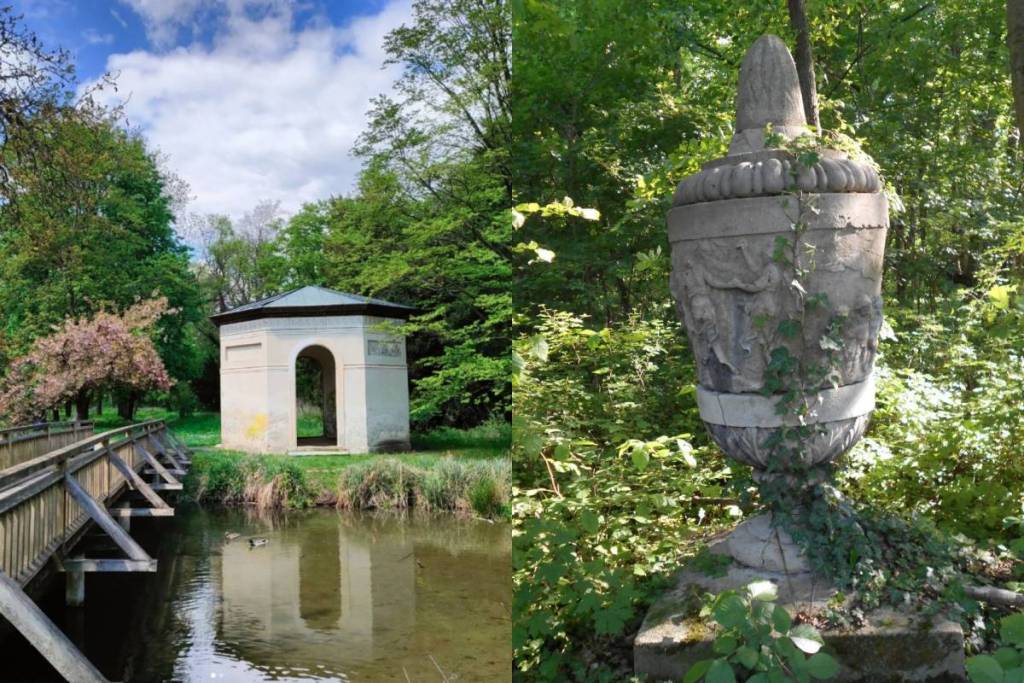
A defining feature of the park is its valuable old tree population, some of which dates back to the time of its founding. In addition to mighty native oaks and ash trees, the grounds fascinate visitors with botanical rarities from all over the world. Count Harrach had exotic trees such as Oriental plane trees, ginkgos, and imposing swamp cypresses imported at the time; today, their roots jut picturesquely into the waterways.
This unique combination of dense woodlands, open meadows, and tranquil waters makes Harrach Park one of Central Europe’s most species-rich habitats. With a little patience, visitors can spot beavers and nutrias along the banks, while deer and hares roam through the undergrowth.
Harrach Park—a paradise for birds
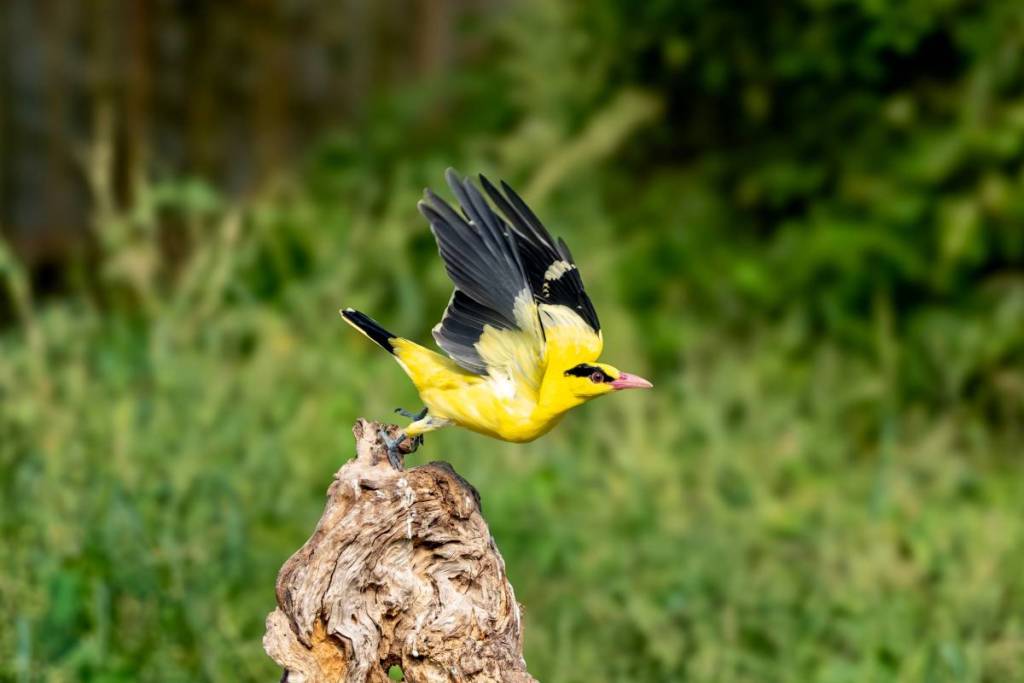
The birdlife, however, is particularly spectacular. Around 50 different bird species regularly nest in the park. The old, partly decaying trees provide ideal habitats for rare woodpecker species, nuthatches, and owls. In the treetops, orioles and long-tailed tits sing, while mallards and rare goosanders swim on the waters.
Even majestic birds of prey use the area as a hunting ground —and with a bit of luck, the rare white-tailed eagle might even make an appearance in the adjacent Leitha floodplains. Thus, to this day, Harrach Park uniquely combines garden art, botany, and active nature conservation.