
When nature awakens from its winter slumber in the spring , half the city heads outdoors. Anyone looking for a destination in Vienna that’s completely free of the usual hustle and bustle of the capital should take a closer look at the 19th district.
Hidden right next to the Hohe Warte is a little piece of Tokyo that was meticulously planned down to the smallest detail by landscape architect Ken Nakajima in 1992. Right here, surrounded by bamboo and maple trees, a cultural ritual takes place that instantly puts you at ease.
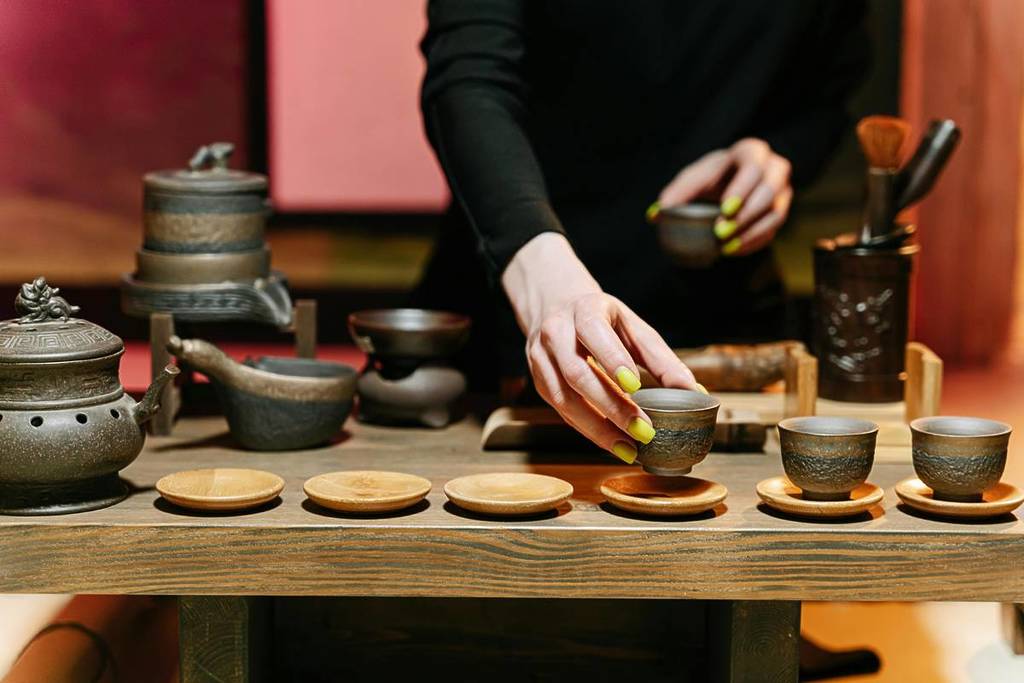
Matcha, silence, and a 400-year-old tradition
The so-called Chadō, the Japanese Way of Tea, is not a quick coffeehouse affair where you down an espresso while standing. It is exactly the opposite. It is about absolute precision, harmony, and respect. The Chado Urasenke Tankokai Austria Association celebrates this art in a small wooden teahouse right by the pond in Setagaya Park.
The focus here isn’t just on the perfect matcha, but on the philosophy of “Wabi”—the aesthetic of simplicity. On May 24, 2026, the season will officially begin again. Read to the end if you don’t want to wait that long. We have a tip for you on how to get your hands on this special ceremonial tea sooner.
At 2:00 p.m. and 4:00 p.m. sharp, you can watch live as the tea masters celebrate every movement. Admission is free; only voluntary donations are requested. However, since the area around the little house tends to get packed, you should secure a good spot in plenty of time.
A Piece of Japan in the Viennese Spring
Aside from the ceremony itself, the setting is simply amazing. The 4,000-square-meter grounds were created as a symbol of friendship between Döbling and the Tokyo district of Setagaya . When the Japanese ornamental cherry blossoms bloom in spring and the magnolias glow in the deepest shades of pink, the backdrop—with its small waterfall and stone lanterns —looks like something out of another world.
The grounds are perfect for relaxing a bit after the ceremony or taking a short stroll. If you’d like to savor the day even further after your Zen experience, there are plenty of options from here.
For example, you could head toward the water and make a detour to the nearby lakes. Alternatively, you can satisfy your hunger at one of the many cozy restaurants in the area. By the way, the park is extremely well connected by public transit ; you just need to take tram line 37 to Barawitzkagasse .
What most people overlook at the entrance
As soon as they enter, most visitors immediately head toward the picturesque pond. But be sure to pause briefly right at the beginning, by the wooden bamboo gate. There you’ll find a traditional stone basin, known as a tsukubai.
It is precisely at this spot that guests ritually wash their hands and mouths before the tea ceremony to symbolically cleanse themselves of worldly dust. Anyone familiar with this step and who observes it in person will immediately understand the deeper meaning of the ceremony that follows much better.
If you can’t wait until May 24, 2026, for the tea ceremony, you can find the Urasenke Tankokai Austria Association, which is organizing the event, at the Kirschenhain Festival on the Danube Island on April 21, 2026.