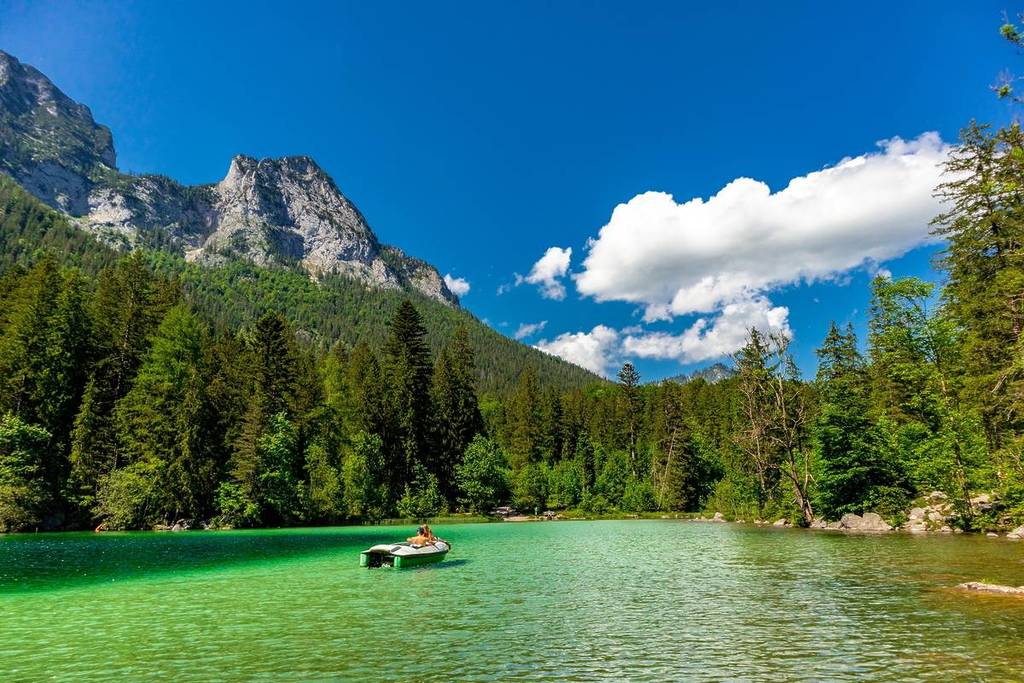

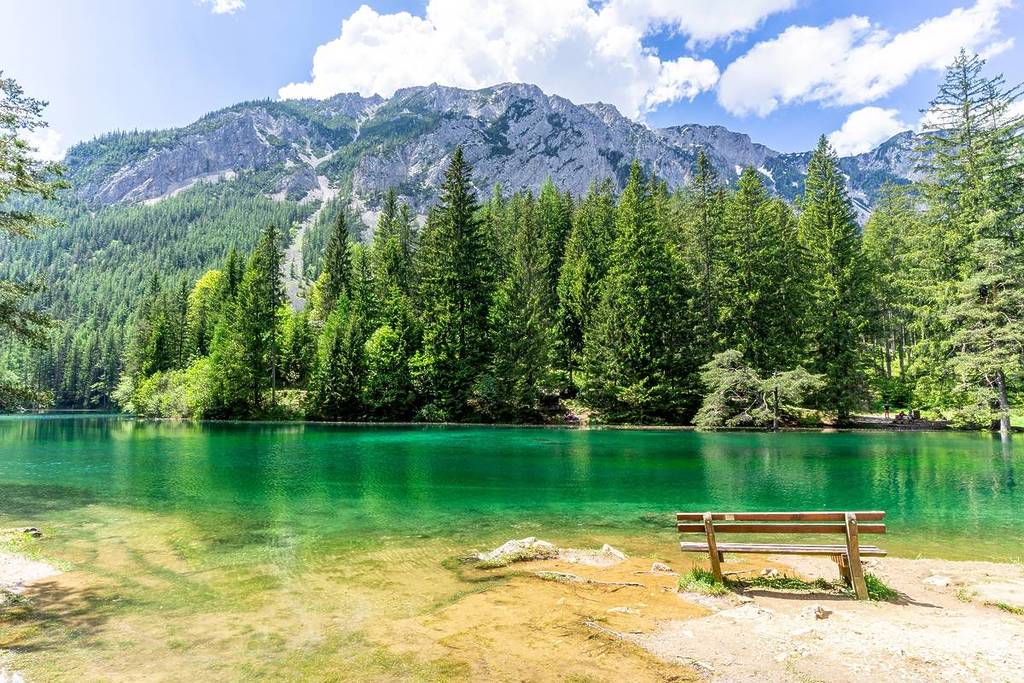
Have you ever sat on a park bench that’s ten meters underwater? In spring, that’s exactly what happens in Styria. When temperatures rise and the snow melts in the Hochschwab massif, a dry basin near Tragöß-Sankt Katharein rapidly fills with crystal-clear meltwater.
What is a harmless hiking trail in the fall suddenly lies at the bottom of a bright green lake starting in May. So if you want to leave spring in Vienna behind for a day, you’ve got a pretty awesome destination right here.
Why the water suddenly swallows everything
The Grüner See is no ordinary body of water that gently ripples along all year round. In late winter, the area resembles more of a small puddle. But as soon as the snow begins to melt, huge amounts of water rush into the valley. The water level then often rises by up to ten meters.
The ice-cold water floods the surrounding landscape, including bridges, meadows, and those famous park benches. The extremely clear, pure spring water and the green grass on the ground create this intense, emerald-green color. If you head to this popular destination in Styria on a sunny weekend, however, you should expect it to be packed. If you’re looking for more laid-back destinations around Vienna, we’ve got plenty of alternatives ready for you, of course.
Hard Facts for Your Trip
From Vienna, you can reach the village of Tragöß in just over two hours via the S6 . The parking ticket costs 8.00 euros per day for one car. Be sure to bring small change or your debit card, as payments are strictly enforced.
From the parking lot, it’s a leisurely 20-minute walk to the lakeshore. The loop trail takes just under an hour, depending on how often you want to take a break on the dry benches along the edge.
By the way,swimming has been completely banned here since 2016. The water is only a chilly 4 to 8 degrees anyway, but the ban mainly protects the sensitive lake bed from stirred-up sediment. So if you really want to go swimming, check out our list of the most beautiful lakes near Vienna.
When is the best time to go to catch the water at its highest level
Many people head there blindly in the height of summer and are then frustrated when all that’s left is a big puddle. Experience shows that the water level reaches its absolute peak between mid-May and mid-June. If you want to see the completely submerged paths, you have to visit during exactly those weeks.
Ideally, set off really early in the morning during the week. Then you’ll only share the trail with a few locals. It’s best to pack a snack in your bag, as the restaurants in the area get pretty busy on peak days.